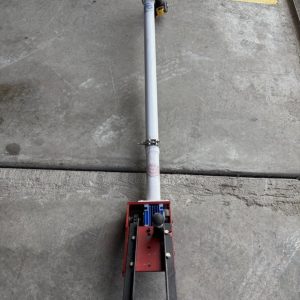
The Aircraft Electric Tow Bar – Mini Max Style provides convenient powered assistance for pilots, aircraft technicians, private owners, and aviation businesses that need dependable movement inside or around a hangar. For aircraft owners who frequently enter or leave a tight hangar, an Aircraft Electric Tow Bar can make routine ground movement more manageable.
This Electric Tow Bar for Aircraft is offered in excellent used condition and may appeal to buyers seeking functional equipment at a lower cost than a comparable new unit. The value of a Used Electric Aircraft Tow Bar depends on condition, completeness, prior use, aircraft compatibility, and the availability of suitable replacement parts or accessories.
The Mini Max Aircraft Tow Bar style is well suited to operators who need powered ground movement but have limited hangar space or transportation capacity. The complete offering combines an Aircraft Tow Bar with Drill, compatible charging equipment, and a compact towing assembly for practical hangar operations.
A Portable Aircraft Tow Bar is valuable for owners who need compact ground-support equipment that can be repositioned, transported, or stored with limited difficulty. The unit can provide the benefits of a Powered Aircraft Tow Bar and Electric Airplane Tow Bar for owners who confirm attachment compatibility and operational suitability.
Within the category of Aircraft Ground Handling Equipment, a compact electric tow bar can provide useful movement capability without the complexity of larger powered machinery. This Aircraft Mobility Equipment can support controlled ground movement while offering the compact characteristics expected from a Light Aircraft Tow Bar.
Why Owners Choose a Mini Max Style Aircraft Tow Bar
This type of powered tow bar is designed to support routine general aviation handling where compact size and controlled operation are priorities. Successful operation depends on matching the tow bar to the aircraft, hangar layout, surface condition, incline, available clearance, and expected movement frequency.
A Mini Max-style unit may help operators manage tight hangar spaces where a larger tug would be difficult to store, turn, or operate. A second person may be appropriate when moving an aircraft in congested areas, through narrow hangar doors, or near obstacles.
Electric Tow Bar for Aircraft Applications
Using an Electric Tow Bar for Aircraft can improve convenience for pilots who need to position an airplane before departure or return it to storage after a flight. Owners may use the unit when positioning an aircraft for departure, inspection, servicing, photography, washing, or long-term storage.
Ground handling equipment can support safer hangar practices by limiting the need to start an aircraft solely for minor repositioning. The operator should follow the aircraft manufacturer’s towing guidance and avoid exceeding steering, nose-wheel, or tow-point limitations.
Used Electric Aircraft Tow Bar Purchase Guide
The available used unit may be attractive to cost-conscious aircraft owners who want compact powered equipment in excellent operating condition. Its replacement by a dedicated tow tug does not necessarily indicate a performance problem, but the current condition should be confirmed independently.
Current images should show the complete tow bar from several angles as well as close views of high-load areas and identification markings. The buyer may request a demonstration using an appropriate load so the tow bar is not evaluated only while running freely without resistance.
Mini Max Aircraft Tow Bar Operation
A Mini Max Aircraft Tow Bar is generally selected by operators who want powered movement in a compact configuration that does not occupy the floor space of a conventional aircraft tug. The close-control configuration can help users align the aircraft carefully with hangar doors, parking marks, maintenance positions, or storage areas.
A qualified person should review the attachment method and operating geometry before the tow bar is used on an unfamiliar airplane. Operators should inspect the attachment before every use and stop if the unit shifts, loosens, interferes, or behaves unexpectedly.
Aircraft Tow Bar with Drill Operation
A powered drill allows the tow bar to generate controlled movement while keeping the overall system relatively compact and portable. A drill that is underpowered, damaged, incorrectly adjusted, or poorly secured may provide inadequate performance or create inconsistent movement.
The operator should begin at a low speed and increase power gradually rather than applying sudden torque that could cause abrupt aircraft movement. The drill should be stored according to its manufacturer’s recommendations and protected from moisture, impact, extreme heat, and unintentional activation.
Aircraft Tow Bar with Charger Storage
Including the charger can simplify setup for the new owner and help maintain the drill battery between aircraft-moving operations. The charger should be inspected for cracked housing, bent contacts, frayed wiring, overheating, corrosion, warning lights, or previous repair attempts.
Operators should follow the drill manufacturer’s battery guidance and avoid exposing batteries to excessive heat, moisture, get more info impact, or freezing conditions. Good battery management is an essential part of dependable operation for any drill-powered aircraft tow bar.
Portable Aircraft Tow Bar Advantages
A Portable Aircraft Tow Bar may be transported more conveniently than a full-size tug, depending on its weight, dimensions, and storage configuration. Good transport practices preserve equipment condition and reduce the risk of losing small components that are necessary for operation.
The equipment should not be left where vehicles can drive over it or where fuel, oil, water, cleaning chemicals, or maintenance debris may accumulate. Shared facilities may benefit from assigning responsibility for charging, inspection, storage, and reporting any equipment concerns.
Powered Aircraft Tow Bar Safety
Powered assistance can improve convenience for owners who operate alone, although aircraft movement should never exceed the operator’s ability to observe and control the situation. A unit that appears powerful while unloaded may behave differently when attached to an aircraft on a slope, rough pavement, or high-resistance surface.
Powered movement can close distances quickly, making careful trigger control and continuous attention essential during confined operations. Aircraft brakes, chocks, tie-down procedures, and facility practices should be used as appropriate after the airplane reaches its intended position.
Choosing an Electric Airplane Tow Bar
An Electric Airplane Tow Bar may be especially beneficial for aircraft that must be positioned precisely because of limited door or wing clearance. Aircraft type alone is not enough to confirm fitment because landing-gear design, tow points, wheel pants, tire dimensions, steering limitations, and weight distribution can vary.
The operating area should be inspected for loose gravel, oil, water, ice, cables, thresholds, floor drains, uneven pavement, and other conditions that can reduce traction or interrupt movement. Regular practice in an open area can help a new user learn turning response, speed control, stopping distance, reverse behavior, and attachment movement.
Choosing Aircraft Ground Handling Equipment
Larger powered tugs may be more appropriate when operators move several aircraft, work on significant gradients, or require continuous heavy-duty operation. Buyers should consider total operating readiness rather than focusing only on the price of the metal towing assembly.
Replacement parts should match the tow-bar design and maintain the strength, fit, and function required for aircraft ground movement. Preventive maintenance is generally easier and less costly than dealing with equipment failure while an aircraft is partially moved.
Choosing an Aircraft Hangar Tow Bar
An Aircraft Hangar Tow Bar should provide controlled low-speed movement that allows the operator to align the aircraft carefully within the available space. The operator should confirm wingtip, tail, propeller, antenna, and control-surface clearances throughout the intended route.
Aircraft should be moved slowly enough that the operator or observer can stop the process before contact occurs. The drill, charger, adapter, and loose hardware should be returned to their assigned storage locations after use.
Maintaining Aircraft Moving Equipment
The ideal Aircraft Moving Equipment allows one trained operator to reposition a compatible aircraft while maintaining close control and clear visibility. Buyers should consider the heaviest realistic aircraft configuration rather than relying only on empty-weight information.
Only the intended tow connection should receive the towing load, and the operator should avoid improvised methods that can damage the aircraft. Dependable Aircraft Moving Equipment is the result of proper selection, careful use, responsible storage, and consistent inspection.
Electric Aircraft Mover Operation
An Electric Aircraft Mover can offer lower storage demands and simpler operation for owners who do not need commercial towing capacity. If the aircraft does not move smoothly, the cause should be identified rather than applying increasing force that may damage equipment or landing gear.
Battery-powered movement avoids exhaust emissions and allows the unit to operate without storing fuel near the aircraft. Long-term reliability depends on maintaining both the mechanical towing assembly and the removable electrical power equipment.
Aircraft Mobility Equipment Benefits
Compact powered equipment may help operators use available floor space more effectively and maintain consistent aircraft parking positions. A compact electric tow bar is best viewed as one part of a complete ground-handling approach rather than a universal solution for every movement task.
Equipment should be labeled with compatible aircraft, attachment instructions, operating limits, battery requirements, and inspection responsibilities when used by multiple people. Periodic reassessment ensures that the mobility solution continues to match the actual aircraft and operating environment.
Light Aircraft Tow Bar Benefits
The term Light Aircraft Tow Bar describes a broad category, so buyers should not assume that every compact unit fits every general aviation airplane. The buyer should identify the aircraft model, landing-gear configuration, tire or wheel-pant arrangement, and required attachment before ordering.
A properly prepared aircraft should roll smoothly enough that the tow bar provides assistance rather than excessive force. A Light Aircraft Tow Bar that is used infrequently still requires periodic inspection because batteries age and metal components can corrode during storage.
Protecting Electric Tow Bar Reliability
Preventive care helps operators identify minor wear before it becomes a failure that interrupts aircraft movement or risks damage. Maintenance should be based on actual condition and operation rather than waiting for the equipment to stop functioning.
- Examine all high-load areas and stop using the equipment if any component appears weakened, distorted, loose, or unreliable.
- A short functional test can reveal electrical or drive concerns before the aircraft is connected and positioned near obstacles.
- Protect the system from moisture, chemicals, impact, vehicle traffic, excessive heat, freezing conditions, pests, and unintentional activation.
Is the Aircraft Electric Tow Bar – Mini Max Style Right for You?
The Aircraft Electric Tow Bar – Mini Max Style can be an excellent choice for compatible light-aircraft owners who need portable powered assistance for routine hangar positioning. A successful purchase depends on attachment fit, aircraft weight, ground conditions, drill performance, charger function, structural integrity, and seller transparency.
Whether operators are sourcing an Electric Aircraft Mover, Aircraft Mobility Equipment, or Light Aircraft Tow Bar, safe attachment, adequate capacity, and responsible maintenance remain essential. With a clear operating path, secure attachment, charged drill, functioning charger, and trained operator, the system can simplify daily aircraft positioning.